In 1965, Oris changed the Swiss watch industry forever. A year later, the first Oris lever escapement watch arrived. Sixty years on, the Oris Star Edition celebrates these milestone events.

A HERO OF HIS TIME
In the mid-20th century, Oris was in a battle to overturn the Swiss Watch Statute. Thanks to Dr Rolf Portmann, it was a battle it would win.
In the 1960s, long before the Quartz Crisis, the Swiss watch industry experienced an existential event. Over the previous three decades, it had been subject to the Swiss Watch Statute, a law that had been introduced in the 1930s to counter anti-competition measures taken by companies battling for survival during The Great Depression.
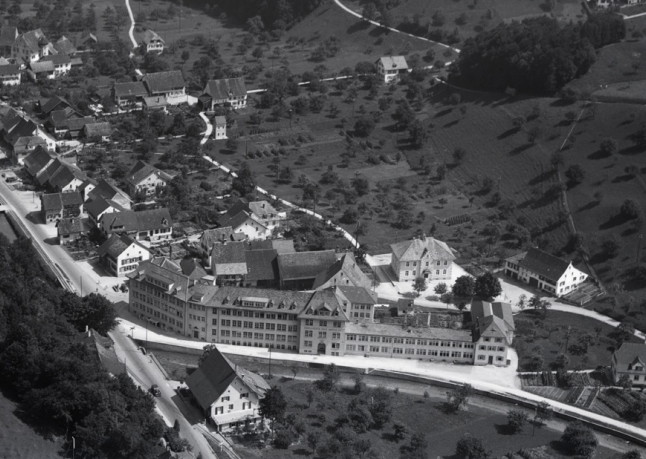
One of the unintended consequences of the statute was that it prohibited Swiss watch companies from innovating. Oris was one such company. The law limited it to less accurate pin-lever movements – and that law was upheld by a Swiss lobby glad to see competition held in check.
In 1956, Oris hired a young lawyer and tasked him with getting the statute reversed. Dr Rolf Portmann would fight the “Swiss Watch Cartel” for a decade. In 1965, he broke the chains that had held Oris back and the law was scrapped. For Oris: liberation, independence.
Now free to innovate, only a year later Oris would introduce the Oris Star, our first in-house lever escapement movement watch. In 1982, Dr Portmann and Ulrich W.Herzog would stage a management buyout. Now in his nineties, he remains Oris Honorary Chairman.
Oris, and Swiss watchmaking, owe Dr Portmann a debt of gratitude. As watch historian Gisbert L. Brunner says on page 11, “without Dr Portmann’s tireless insistence, the ill-fated Watch Statute would have remained in force.”
This year, we mark the 60th anniversary of that heroic, historic moment with the Oris Star Edition, a tribute to Dr Portmann and his unique contribution to Oris and to Swiss mechanical watchmaking.
LOOK TO THE STAR
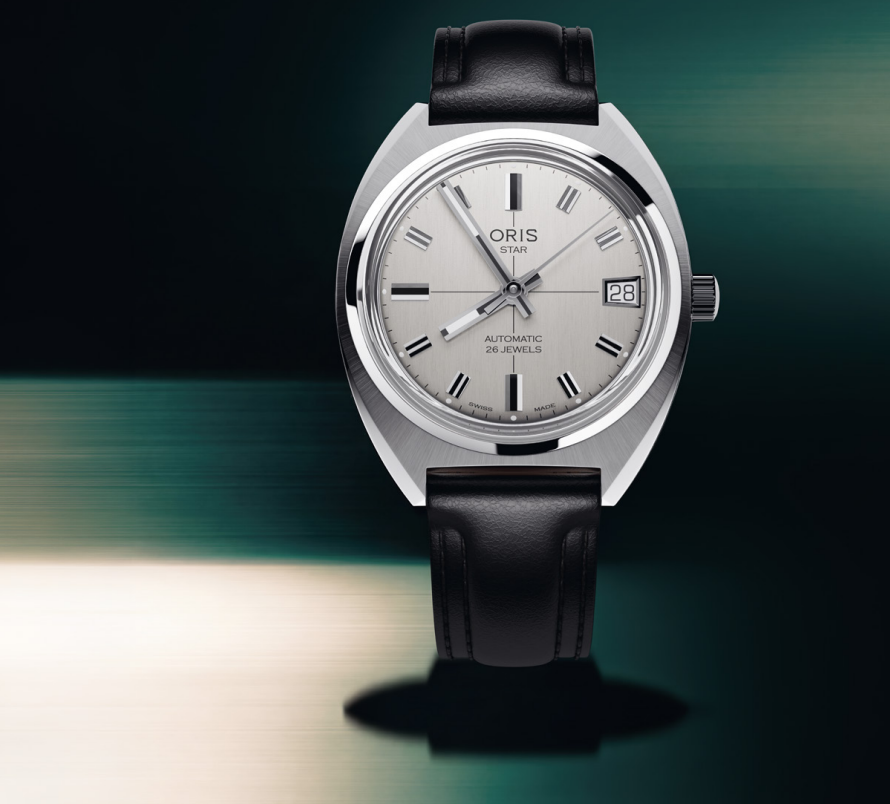
The new Oris Star Edition is a faithful revival of one of the most significant watches in Oris history. As with the original, it captures a striking modern elegance.
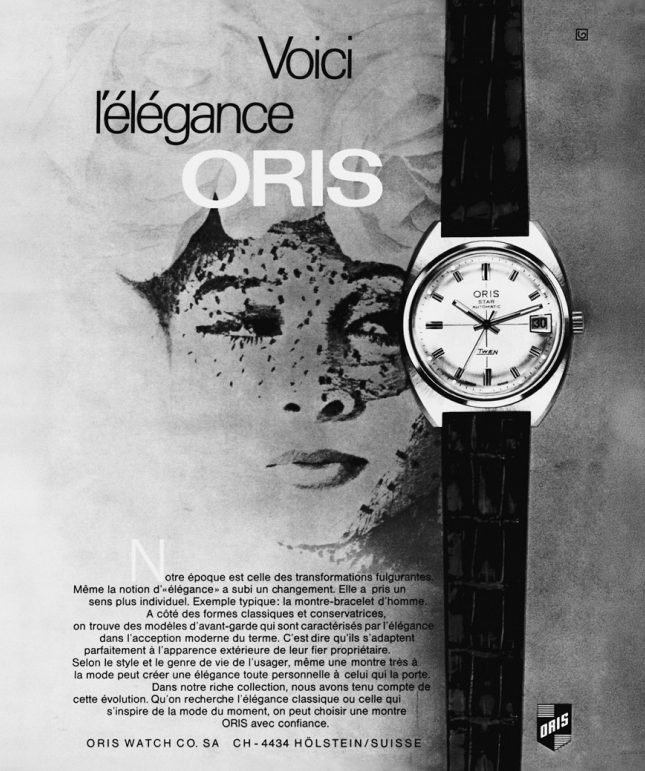
The original Oris Star of 1966 was a landmark watch for Oris. Not only did it mark the beginning of a new mechanical era for the company, it also signalled changing tastes – and the democratisation of luxury.
In the fashionably liberated mid-1960s, elegance no longer meant watches had to be round and gold; those sober, rigid standards were fading away. Instead, the barrelshaped, modernist Star captured the shift to a new elegance. It was space-age in looks, too, reflecting the pioneering spirit of the time.
This was a watch from a heritage brand that was also a manifesto for state-of-the-art technology and contemporary taste and design.
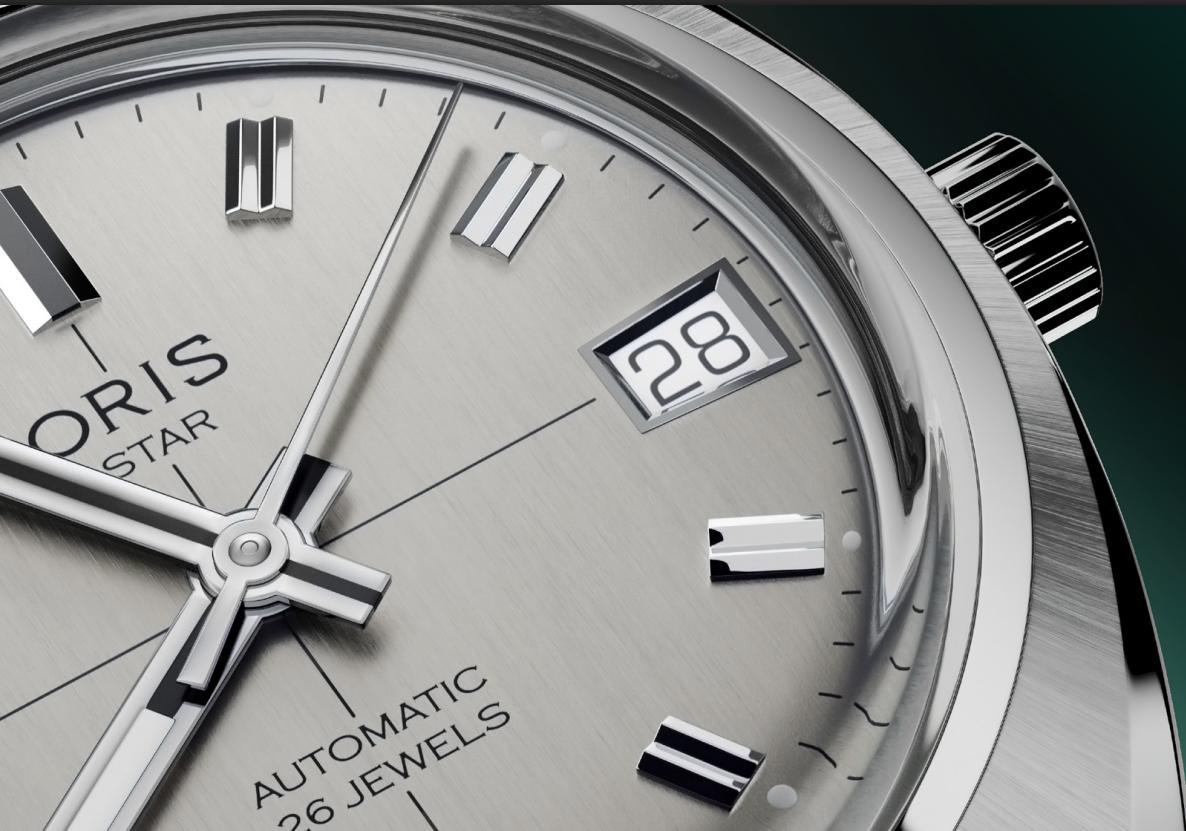
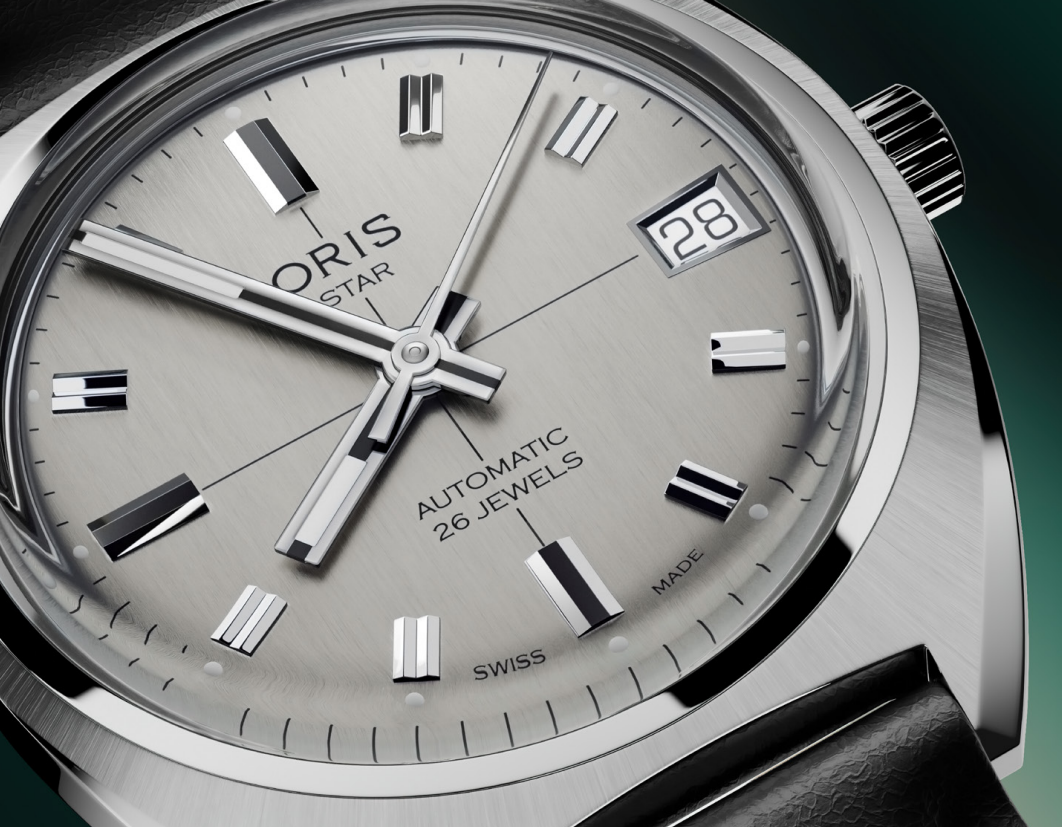
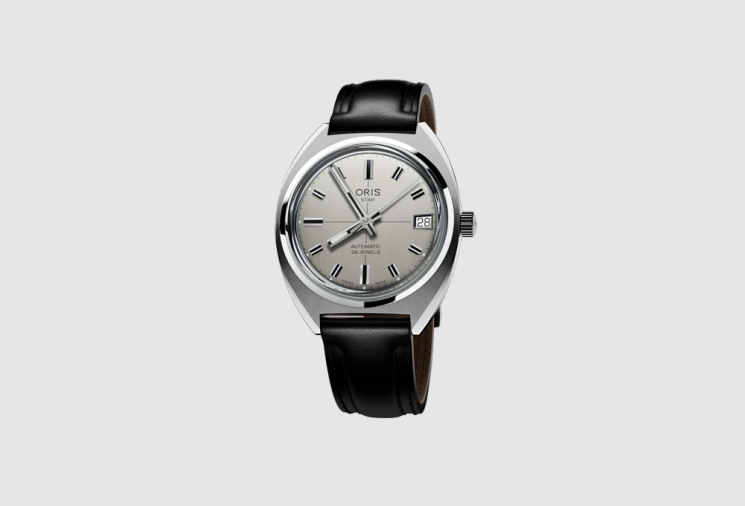
Its story is retold through the new Oris Star Edition, introduced at Watches and Wonders Geneva 2026. Visually, it’s faithful to the original. The 35.00 mm case is barrel-shaped, with lugs seamlessly integrated into its silhouette; the silvery dial is sparsely decorated with twin-baton hour markers and square-tipped hands; the words “Star”, “Automatic” and “26 Jewels” have been added to the dial, a delicious 1960s throwback; there’s an asymmetrical date window at 3 o’clock; and the finishing touch is a vintage plexi-crystal. Like the original, it’s set on a black leather strap. It echoes a great triumph.
Inside is Oris Calibre 733, a Swiss Made automatic with a 41-hour power reserve. The case back is engraved with the evocative 1960s Oris Shield crest. It’s non-limited and will be in stores in May.
At once, the Oris Star Edition is sober and utilitarian, stylish and sophisticated, a tribute to one of the greatest stories ever told in the history of Swiss watchmaking.
A STORY FOR ALL TIME
Gisbert, thank you for speaking with us. Let’s start with a quick bit of background to your life in watches. Tell us your watch story…
My passion for mechanical wristwatches began in 1964 at the age of 17. At that time, I was fascinated by chronographs. I used my Christmas tips to buy a new Heuer Carrera. That’s how it all started. The following year, I purchased a Jaeger-LeCoultre Memovox alarm clock. From there, my passion for ticking timepieces was unstoppable.
When did you discover Oris?
That was in 1977, if I remember correctly. During a flea market at Münchner Freiheit, I discovered two extraordinary and very rare Oris chronometers with manual winding movements. I was both amazed and fascinated that Oris had apparently passed the demanding chronometer test with comparatively simple pinlever calibres. Although I wasn’t really enthusiastic about relatively simple pin-lever movements, I purchased these two wristwatches. And I must say: after a thorough service, both watches ran perfectly.
You wrote a book about Oris recently: what struck you about the brand during your research?
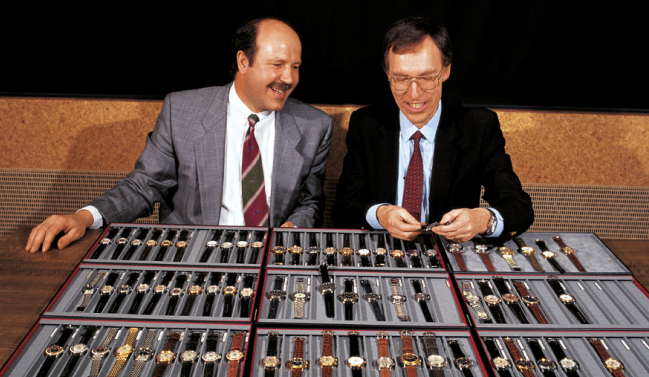
I’ve been fascinated by Swiss watchmaking history for decades. My exploration of the highs and lows, as well as the achievements of ambitious protagonists and brands, combined with my collection of mechanical wristwatches, has resulted in several books since 1983. Oris has always held a special place in my heart because it achieved truly outstanding things in the field of lever escapements and ranked among the top makers in Switzerland in terms of production numbers. What’s more, Oris can be compared to a roly-poly toy. Despite various crises, it always kept going. Just don’t let it get you down. This also applies to the 1980s, when Dr Rolf Portmann and Ulrich W. Herzog acquired Oris, which was in decline in the wake of the Quartz Crisis, in a management buyout and brought about an incredible brand renaissance.
The “It’s High Mech” slogan and the special Red Rotor prompted me to buy my first modern Oris.
One of the big moments in Oris’s history was the reversing of the Swiss Watch Statute in 1965. Firstly, what was the statute?
I‘ll try and be brief! The New York stock market crash and the resulting global economic crisis had a very negative impact on the Swiss watch industry. Fierce competition forced manufacturers to fight hard, sometimes using very tough tactics. These included unfair competition and massive price dumping. To counteract this, a law to protect and regulate the watch market came into force on 15 March 1934. This introduced strict licensing requirements for exports of watch parts as well as for company formations, expansions and restructuring, and aimed to curb the export of Swiss watch movements in template form. Oris had done nothing wrong, but was particularly affected. In order to be able to offer watches that were both reliable and inexpensive, Oris had specialised in the aforementioned pin-lever escapement at an early stage. This once strategic decision could not be changed for decades due to legal restrictions and a strong lobby of manufacturers of watch movements with classic Swiss lever escapements. This was how unwelcome competition was eliminated. For more than 30 years, Oris was condemned to manufacturing timepieces with pin lever escapements.
And how did it affect Oris?
By the 1950s, pin-lever movements were no longer winning over discerning watch enthusiasts, especially as manufacturers repeatedly placed advertisements branding this simple but highly reliable escapement technology as inferior. The statute meant that for Oris, promotion to a higher league in the Swiss watch industry remained elusive.
How long did it take to reverse the law and what hurdles did Oris have to jump along the way?
It felt like an incredibly long time. The principle of continuing the crippling watch statute was justified on the grounds of protecting jobs: unrestricted economic freedom was contrasted with a regulated system offering acceptable working conditions. However, socio-political goals played only a minor role. The focus was on controlling production and exports in the Swiss watch industry. The export of finished watches, complete movements and cases did not require a licence, while raw movements, templates, components and special tools and machines remained subject to authorisation. As a result, Oris continued to be affected by the restrictive legal regulations. In 1956, Oris CEO Oscar Herzog, who was not related to Ulrich W. Herzog, hired Dr Rolf Portmann. The primary job of the trained lawyer was to lobby for the abolition of the hated watch statute. And Dr Portmann did a thorough job. The first easing of restrictions became noticeable in 1961. Oris was allowed to launch the first stone anchor calibre with the designation 482 Super. The desired goal and abolition of the watch statute was achieved in 1966.

Man of the hour Dr Rolf Portmann joined Oris in 1956. The trained lawyer’s role in reversing the punitive Swiss Watch Statute changed watchmaking forever
Just how influential was Dr Portmann in the reversal?
I would venture to say that without Dr Portmann’s tireless insistence and struggle, the ill-fated Watch Statute would have remained in force for much longer. We must not forget that 1969 saw the start of the quartz revolution in wristwatches, triggering an unprecedented crisis in the watch industry. Had it not been for this, the Watch Statute would probably have remained in force.
What was the impact on Oris?
First of all, the Quartz Crisis hit Oris with full force. In 1971, the founding family sold their manufacture to the General Watch Company, part of ASUAG, for 30 million Swiss francs. This made it a sister company to established brands such as Certina, Eterna, Longines, Mido and Rado. In his role as managing director, Dr Portmann developed Oris into a leading Swiss brand for quartz timepieces in the lower and middle segments. Annual production: 1.2 million wristwatches and alarm clocks.
However, this did not stop the wheel of time from turning. Fierce competition meant that by autumn 1982 Oris Watch Co. AG was fighting for its life. But with effect from 1 April 1982, Dr Rolf Portmann and the then marketing director Ulrich W. Herzog had already secured the Oris trademark rights and the sales organisation. Detached from ASUAG, which, as is well known, merged with SIHH to form SMH, a new business concept emerged that was in keeping with the changing times and carried the company into the future.
And how significant was the reversal in shaping the Swiss watch industry we know today?
Nothing better could have happened for the Swiss and international watch industry. The rapidly changing market had been eagerly awaiting the new Oris with its concept of offering high-quality, precise wristwatches at affordable prices. Another key pillar was and remains the company’s independence at a time when large corporations were becoming increasingly important. Entrepreneurial courage and a willingness to take risks have created a player that, if it did not exist, would definitely be missed.
The year after the statute fell, Oris introduced the Oris Star. What was significant about this watch and what is its legacy?
In my opinion, these were new, extraordinary stars in the watchmaking firmament following the end of the statute brought down by Dr Portmann. Today, we are talking about collector’s items that are attracting more and more Oris fans around the globe.
How do you feel on seeing the new Oris Star Edition watch?
Retro perfection. The new Star recalls a revolutionary chapter in the history of Oris. It brings back a characteristic design and revives a fascinating era in its own way. Watch lovers with an appreciation for horological values and tradition will rejoice. A striking piece of watchmaking history at an attractive price. What more could you want?
ORIS STAR EDITION
The Star Edition celebrates 60 years since Oris’s first watch with a lever escapement movement, and the stunning story behind it
IN DETAIL
Case Multi-piece stainless
steel case
Size 35.00 mm
Thickness 11.10 mm
Lug to lug 41.50 mm
Dial Silver with applied indices
Luminous material Hands and
indices filled with Super-LumiNova®
Top glass Plexi-crystal
Case back Stainless steel, screwed,
vintage Oris Shield engraving
Operating devices Stainless
steel screw-in security crown
Strap Black leather with pin buckle
Water resistance 5 bar
MOVEMENT
Number Oris Calibre 733
Functions Centre hands for
hours, minutes and seconds,
date window, instantaneous
date, date corrector, fine timing
device and stop-second
Winding Automatic
Power reserve 41 hours
Swiss retail price
$2,300 on Leather Strap
Availability May