
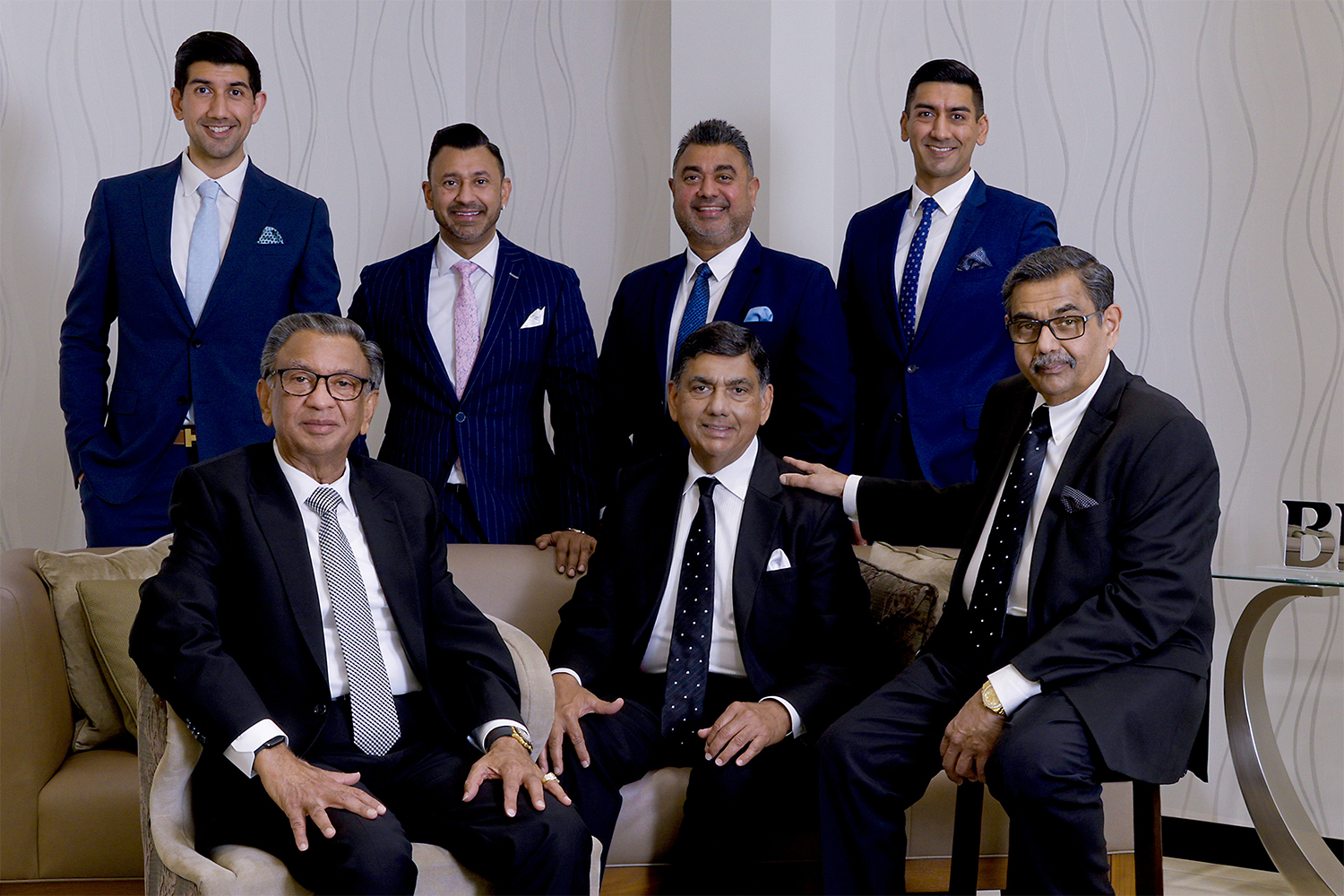
The journey of Bhindi Jewelers is like no other. Steeped in a rich ancestry of goldsmiths, the Bhindi family migrated from India to Fiji in 1929, before relocating to Vancouver to open a jewelery store in the 1970s. In 1985 that they moved to the States, specifically to Southern California, with a mind to serving the growing South Asian community there. Ashwin Bhindi, from the family’s third generation, is part of the team tasked with steering the ship today, along with his cousins Ronil, Ketan, and Sanit. He spoke with Watch Insider’s Daniel Malins about collaborations with brands and thriving under the pressure to improve.
Watch Insider: What impact did inflated tariffs have on your business last year?
Ashwin Bhindi: The tariffs were a bit tumultuous, to say the least. We all found out when we were in Geneva [Watches & Wonders] and it caused an absolute frenzy during the show. It unfortunately took away from the allure of being in a show of that caliber because all everybody was thinking about was how to react. Some of the micro brands we deal with literally went into their headquarters that night, packed a shipment large enough to supply the US for the remainder of the year, and shipped it. Obviously, there were other large-scale brands that didn’t have the ability to react quite that quickly.
I’m glad we’ve reduced the tariffs, but they created nerves all throughout the year with customers wondering, “Should I even be buying right now?”

WI: Stepping away from the business issues of today, can you tell me about the origins of Bhindi and what roads led to now having multiple premises across America?
AB: Officially, our story starts in 1929 when my grandfather migrated from India to the Fiji Islands. My uncle, who is one of three principals in our company, has essentially embraced the role of family historian and confirmed that our family has been goldsmiths for at least 18-19 generations and potentially as many as 25. The beauty of India is they have an amazing system of bookkeeping and maintaining manuscripts of family history dating back generations. These books are meticulously stored amongst specific households, and these families continue this tradition, keeping this beautiful history alive and current. One can only hope these books have not been damaged or destroyed over time.
In the early 70s my father and his two brothers, who grew up working in the store in the Fiji Islands, decided to expand internationally, to Vancouver. My father, at the age of 16, went to Vancouver to start the store, and got laughed at by a lot of banks who said: “You’re a 16 year old kid asking for a loan, I think you’re out of your mind.” Fortunately, he was able to find a bank that saw his vision, raise the money, and open a store right in the heart of Vancouver.
We stayed in Vancouver throughout the 70s and all of my generation, the third generation, of Bhindi Jewelers was born in Vancouver. My father then decided to establish our first footprint in the US, in Southern California in the city of Artesia in 1985. My father figured that, because our primary focus at the time was South Asian jewelry, we could be an anchor for the growing South Asian population in Los Angeles and Orange County as Artesia sits between them. There were a lot of professionals coming over—doctors, lawyers, engineers, entrepreneurs—but they had nowhere to shop and maintain their cultural identity.
In the same strip mall as our store, my father also coordinated to bring in an Indian grocery store, clothing store, restaurant, and an Indian music/video store where families could get a taste of home. The strip mall became a one-stop shop and we were pulling people from Sacramento to San Diego. People would make a full weekend of coming to the area, and would stock up on groceries, buy Indian outfits from the clothing store, and get jewelry from us.
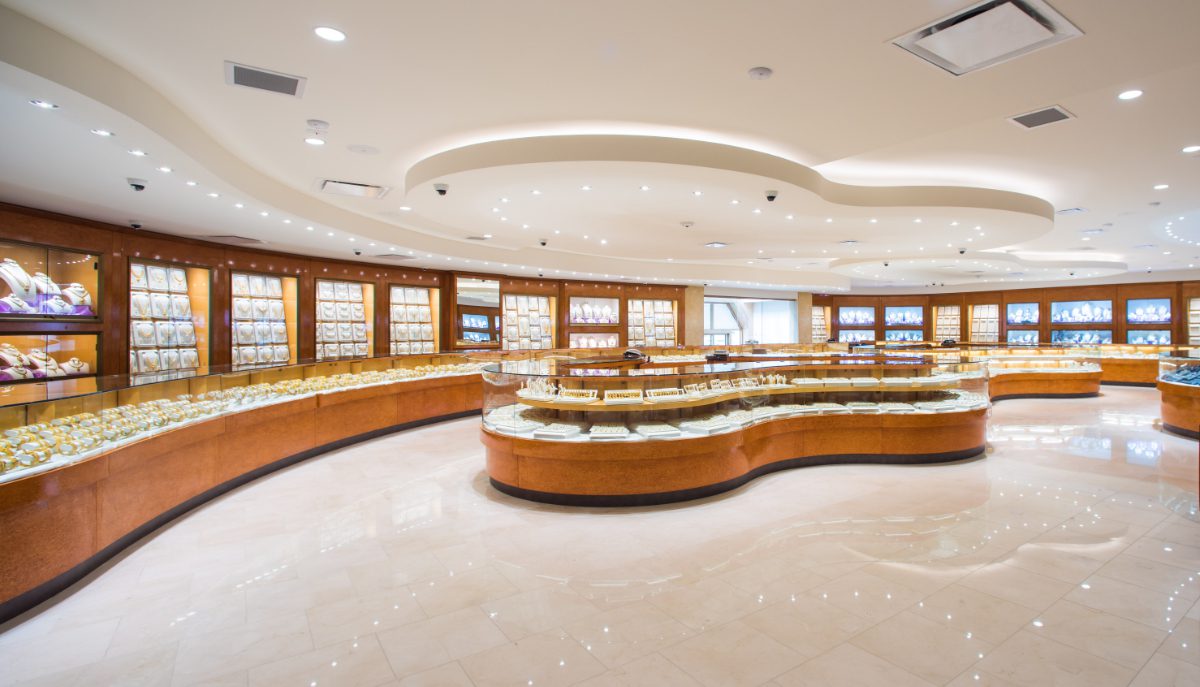
That humble 800 square foot location did so well that we eventually expanded to three stores. We opened a location in Berkeley in San Francisco, which inevitably moved to Newark, built a larger showroom in Artesia, still primarily focusing on 22 karat jewelry, and even opened a New York store in Jackson Heights.
The Jackson Heights store did phenomenally well. My uncle says that in its heyday, clients would be trying to purchase new inventory before he could even tag it. It was also unfortunately at a point in time where Jackson Heights simply became too dangerous and my grandfather decided, “No more, the risk is not worth the reward,” and we closed the store shortly after.
We’d worked hard to build our brand on the East Coast and didn’t want to abandon it. Right around this time, Atlanta won the bid for the [1996] Olympics, and we thought it had great growth potential, similar to how we originally viewed Artesia, just on a much larger geographic scale. At the time, there was a large Indian population in Georgia and its neighboring states, and they really had nowhere to shop for Indian jewelry. Opening the store in Atlanta gave them a central hub to go to and to this day we still have people that spend a weekend out there to get high-quality pieces.
Throughout this time, my father and uncles, driven by their ambition to brand Bhindi throughout the US, had three different teams going to cities across the country almost every weekend. These teams would attend mini conventions, bridal shows, and even Indian concerts, setting up temporary booths with product for sale, to spread the Bhindi name nationwide. That’s how we built our brand in the South Asian community in the US. It was very organic, not through heavy marketing, just true ‘boots on the ground’ work.
My wife is from Portland, and when we first started seeing each other, she told me, “My parents would always buy jewelry from you guys when you came out there.” To this day she has Bhindi boxes from the early–mid 90s. We’re very blessed in the sense that my father and uncles had the foresight to create Bhindi branding across the country and have these physical pop-ups and roadshows.
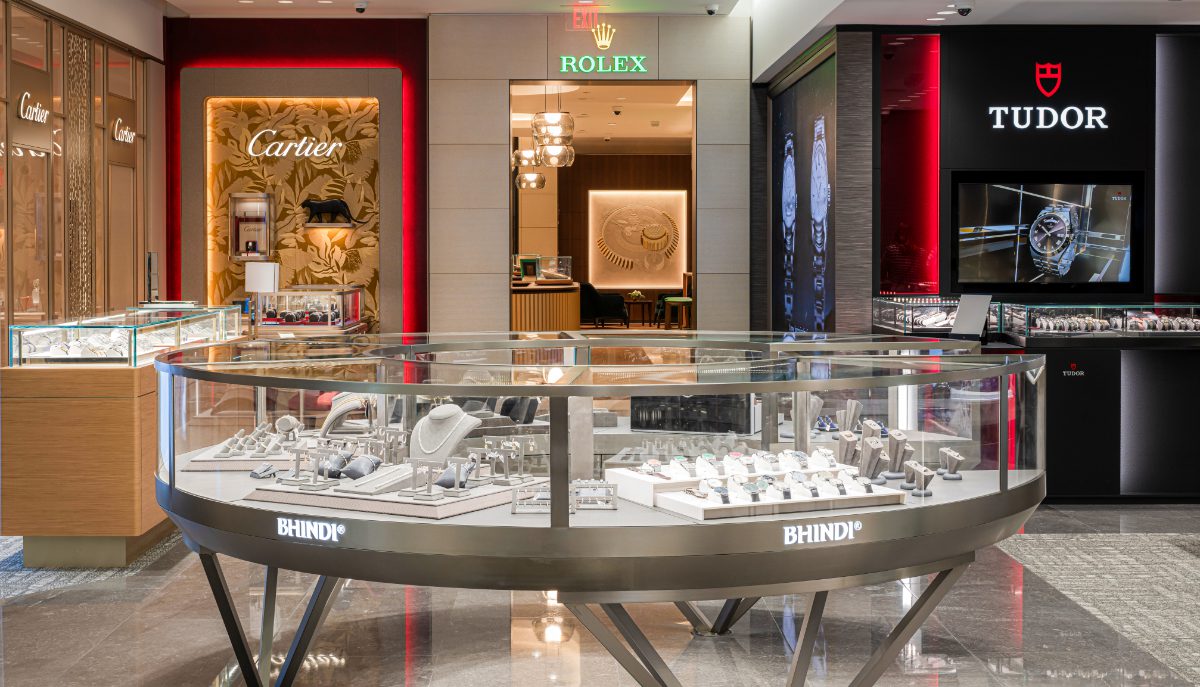
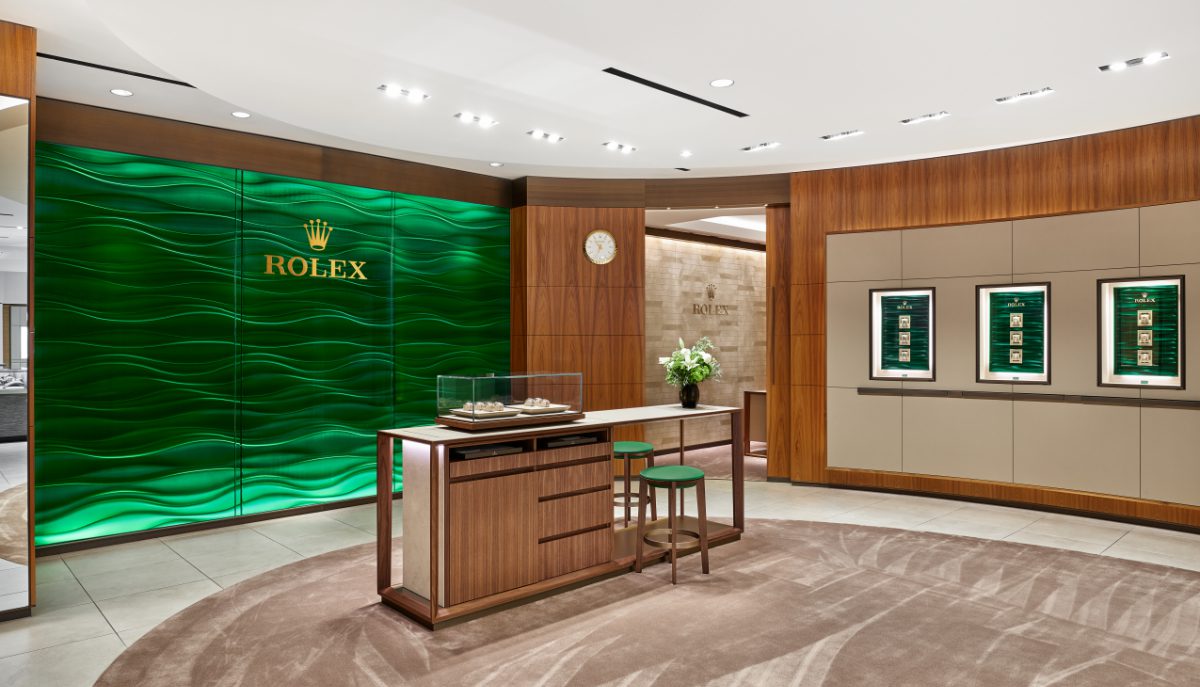
Fast forward to the early 2000’s, and our Artesia store expanded again to two-stories, with the top floor dedicated to fine diamond jewelry and the bottom with 22 karat gold. We were fortunate to partner with Rolex as our first watch anchor in the late 90s and we blossomed with them quickly as we had a very large appetite amongst our clientele for the 18 karat pieces, especially the 36mm Day-Date, the 28mm Lady-Datejust. We’ve had some really wonderful growth with the brand over the years. Both Glendale and Artesia have a beautiful Rolex presence in our stores which elevate the overall atmosphere.
The Glendale location, which opened in 2013, was our first foray into a mall, compared to our free-standing destination stores. Glendale was also our first venture into a non-South Asian clientele market. We really took a leap of faith on Glendale because only three brands saw our vision – Rolex, TAG Heuer, and Montblanc. Everything else we had in there was jewelry. Only later, after we had proved our success, did we start getting more attention from other brands.
Our third generation has been the driving force behind the watch expansion for Bhindi. None of us had originally intended to join the business, except for my eldest cousin Sunny, who always appreciated the business, probably due to his dad nudging him and making sure he came to the store to earn his allowance. The rest of us had ventured off into our own realms. My cousin Ron, who I now work with in Glendale, was in real estate; my brother was a corporate attorney; I was in marketing. We’re very blessed to say that we all have different interests and backgrounds that we were able to bring to the table to help expand the business.
Now we have four stores including the Glendale store, where we just completed a massive renovation in November of 2023. We began the renovation early in 2020, and it was a painful process due to all the hiccups and hurdles that Covid presented, but we eventually completed the project after about three years. There’s an adjacent property called the Americana, and it’s a beautiful outdoor mall that has in recent years brought on high-end luxury brands like Louis Vuitton and Gucci. We realized that the Americana’s atmosphere aligned better with the future of Bhindi, so, we’re in the process of building a new legacy store, which will be open by early summer, and where we’ll have a wonderful showroom to then showcase the full experience Bhindi has to offer to our clients.
In the past six years Bhindi has put a lot of effort into focusing heavily on the luxury experience for our clients. We’ve got a wonderful client base and an incredible team of associates who have deep and personal connections with their clientele. We wanted to shift the dynamic from what felt like more of a traditional transactional environment to offering different experience spaces. It’s not so much sitting behind a desk selling, but more lounge atmospheres with private viewing rooms, beverages, and so on. This new expansion into the Americana is going to give us the footprint to do so. We have made some exciting strides in creating a memorable experience in our current store, but we are limited by our overall square footage. This new store is really going to allow us to elevate ourselves into the next realm of hospitality.
WI: On a map there is an enormous gap between your Atlanta store and your other West Coast boutiques. How much more difficult is it to maintain high standards for a store that’s thousands of miles away?
AB: The beauty of our operation is that we truly have a tight knit family that trusts one another’s capability in performing in our respective departments but also respects each other’s opinion and input in all major decisions. We are constantly discussing matters regarding all stores, as a family member is present in each location, and their insight is invaluable. We have regular upper management meetings and discussions on how to maintain best practices and operations of the store. We obviously adjust according to our geographic location, because the demographics are different, even for stores in close proximity like Artesia and Glendale. Similarly in Atlanta, some of the inventory will be different to reflect the appetite and the personality of the clients out there. Each store has its own minor tweaks within it, but we still maintain the same platform and provide the same Bhindi experience across all of them.
In the past few years, we’ve really started streamlining and empowering our managers to communicate and share their experiences amongst all store locations. I think this kind of open communication keeps everybody motivated to continue getting better. We all know that none of us are perfect and there’s constant room for growth, and I think just being open to that mindset and willing to embrace that allows us to continuously reach for the stars.
WI: When it comes to the relationship with Rolex, to what extent do you look back and see that as a bit of a watershed moment in your company’s progression? How much of your time do you spend in discussions with them about expanding the offering to all your stores?
AB: The relationship with them has been an amazing one, and I don’t say that just because it’s Rolex. More than anybody Rolex really wants their retailers to excel. They want to see you perform at your absolute best, and offer you tools, insight and share best practices, to push you to really elevate yourself, especially when it’s easy to become complacent. I think that alone has been such a wonderful part of the relationship—maintaining this dialogue with them and having them say, “Okay guys, you have done a great job here, what do you think is next?” They always push you to look at the future and to see how you can get bigger, better, stronger. The brand has done a phenomenal job maintaining brand equity and creating a space that’s special to Rolex. I don’t think anyone can argue that Rolex hasn’t done an amazing job over the years.
Most of our discussions with Rolex focus on a singular objective: how to continuously elevate the Rolex experience at Bhindi. Our priority is ensuring that each customer receives the seamless world-class luxury treatment associated with Rolex.
WI: Do you find it difficult to appeal to the South Asian community in the same way that the business did back in the day? The theory goes that retail can look a bit globalist and generic nowadays.
AB: My father and his two brothers positioned the Bhindi brand to be synonymous with quality and to have unique designs, as far as the jewelry offerings are concerned. When clients are coming in, there’s a deep appreciation that, although we might have a higher price point than some of our competitors, the quality is unmatched. The designs are unique and you can feel confident you will not be walking into a party with 50 people wearing the exact same mass-produced piece as you, so it allows you to really celebrate the milestone that you intended to with that purchase. That gives us a bit of edge in the luxury world.
As far as the newer generation is concerned, a lot of them grew up with their parents visiting our store, so there is a familiarity with our brand in the community. Our San Francisco and Atlanta stores still tend to have a predominantly South Asian clientele, but in our Glendale store it’s a very diverse clientele, especially since we’re in a mall. Even Artesia has really blossomed and that’s largely due to the watch offerings. It’s really encouraged us to broaden our horizons, which has been fantastic because it allows us to speak to multiple audiences at the same time.
WI: What does expansion look like for you? Is it more locations or just improving upon what’s already there? From a nostalgic perspective, do you ever think about taking the brand back to Canada at some point?
AB: We always joke about going back to Canada at some point. I think we all have a deep-seated love for Canada and Vancouver specifically, since we have lots of family out there and it’s very near and dear to our hearts. We don’t have any intention of leaving the States and we want to maintain our potential expansion plans here. We’re always looking for expansion as far as adding an additional store, but we’re going to be very calculated when it comes to that. We want to make sure it’s the right location and that it taps into the right clientele and demographic. There’s also the question of what we intend to offer in that space. Will it focus more on jewelry or watches? Will it focus on a specific brand? We are looking at all opportunities and we’re young, this third generation, so we have plenty of years ahead of us to maintain this journey. When I started, I was probably amongst the youngest in the room by 15 to 20 years. It was humbling. I learned at that age that this is an industry filled with individuals that have decades of experience behind them and what you may think is a brilliant or novel idea, will be something they thought of 10 years ago and there’s a reason they have not implemented it. Don’t come in guns blazing and thinking you know everything. I learned so much in those early years from amazing entrepreneurs and retailers that would share their experiences and best practices.
There’s also been a really interesting shift from those years to now. When I first started, people were apprehensive about sharing the “secret sauce” as to why or how they were succeeding, which was completely understandable. But, as the years progressed, I think everyone realized that the pie is big enough for all of us, and if we’re sharing then we can all win together. We now have the ability to pick up the phone and call what used to be considered a competitor and just have an open discussion and share best practices. There was a brand that we were talking to in recent times and I called three of four peers in the industry who carried them. In the past, the other retailers would probably have discouraged you right out of the gate and spoken about your addition of the brand with more of a negative approach. But now they’ll give you honest feedback and speak very openly. It’s very refreshing that we’ve gotten to a point where we are so transparent with one another. If you’re doing your job correctly and have maintained relationships with your clients, then they’re going to stay with you, and you don’t need to worry about sharing advice with other operators.
WI: I also wanted to get your thoughts on the collaboration you did with Zenith. What went well, and might it represent a blueprint for subsequent collaborations of that nature?
AB: That was really an incredible journey, to be honest. We had no previous experience in a collaboration of that caliber. We had done a small project with NOMOS watches, but to deal with one of the larger manufacturers and it go so seamlessly, I was genuinely impressed. We had met Zenith in Geneva, and, coming from a jewelry background, we were just genuinely impressed with what they were doing with gem setting in stainless steel timepieces. So, we spoke to the head of Zenith’s product design at Watches and Wonder and agreed this would be an incredible project to collaborate on. We’ve always been enamoured with the rainbow bezel and appreciate how challenging it is to acquire that many gemstones with perfect gradation. It’s really an incredible feat for any brand to accomplish and we know how painstaking it can be to go through and sort through all these gemstones and have them perfectly done, bezel after bezel. We proposed our preferred model as well as our wish list, and within a few months they were sending us renderings. I remember Ron and I sitting in the office, thinking “Is this happening? We’re really going to do a collaboration with Zenith,!”
They sent us the first mock-up and we had some feedback with some of our insight and pushing the envelope a little bit further and saying, “Can we make it a skeleton dial?” and “Can we do matching hour markers and match them against the bezel as well?” The amazing part about Zenith is that at no point did they come back and say “No, we’re not doing that.” It was always, “We haven’t done that before but let’s see if we can.” A brand of that stature could have rejected our requests simply because they wouldn’t want to put the time and effort into it.
That following January, I was in Miami for LVMH watch week and Zenith showed me the prototype and said that they were going to be able to deliver that year. Literally from tableside conversation to the point of delivery to our first client was 18 months, which is incredibly fast. As a retailer, we were extremely happy to have a collaboration with an amazing brand like Zenith, given their history and accomplishments. It was just a wonderful sense of achievement for us as a family business to partner with them on such a special project. We commemorated the launch with a beautiful event in Hollywood, our clientele absolutely loved it, and we sold the majority of our pieces relatively quickly.
WI: If the right brand came along or maybe even another one with Zenith, would you be open to doing it again?
AB: It’s a unique opportunity, retailers do not often get the chance to partner with brands to make collaboration pieces. This evolved quite organically from our team admiring their achievements in gem setting, creating a concept on the spot, and it coming to fruition shortly after. I am sure we have been slightly spoiled by the process, because I can’t imagine it would usually be so seamless.
With Zenith, it was such a delight to work with them, and they set the bar pretty high, but of course we would be more than happy to entertain another collaboration. We’re not going to just jump into any project with any brand. We’re very specific about what we like and making sure it’s an offering our clients would be excited for. It would need to check a lot of boxes for us to move forward with it. I can’t say much more, but there may be something else in the works… stay tuned!
This article first appeared in the February 2026 edition of Watch Insider magazine.